
What we do at Liquitory

Liquitory looks at value creation in its entirety

Our goal is to digitize and combine the instruments for generating liquidity and reducing risk that are used along the entire value creation process. In this way, we enable an end-to-end, integrated financing chain from down payment and delivery financing to inventory financing and the financing of payment terms for final products and services.

Step-by-step transactional monitoring of financed assets along the value chain enables real-time risk monitoring. Through the additional use of technology-based modules for risk minimization, we secure attractive conditions for liquidity generation.
What we do at Liquitory

Liquitory looks at value creation in its entirety

Our goal is to digitize and combine the instruments for generating liquidity and reducing risk that are used along the entire value creation process. In this way, we enable an end-to-end, integrated financing chain from down payment and delivery financing to inventory financing and the financing of payment terms for final products and services.

Step-by-step transactional monitoring of financed assets along the value chain enables real-time risk monitoring. Through the additional use of technology-based modules for risk minimization, we secure attractive conditions for liquidity generation.
Steps to efficient working capital management

Advice on suitable financing instruments

In the first step, we analyze the existing value creation processes in your company with you. We then define measurable targets and determine which instruments are best suited to improve your working capital.

Digitization of your assets

Whether fully automated via the connection to your ERP, WMS or MES System or manually: the digitization of your assets to generate liquidity is simple, fast and secure on Liquitory.

Identify and minimize risks

A variety of instruments are available to reduce performance and payment risks. We use those that minimize the specific risks in your value creation and optimize your financing conditions.

Automated processing and real-time monitoring

Solution offers are obtained in real time from a wide range of financial partners and their comparability is ensured through clear KPIs. Contracts are concluded directly via Liquitory using SmartContracts and digital signing.

Steps to efficient working capital management

Advice on suitable financing instruments

In the first step, we analyze the existing value creation processes in your company with you. We then define measurable targets and determine which instruments are best suited to improve your working capital.

Digitization of your assets

Whether fully automated via the connection to your ERP, WMS or MES System or manually: the digitization of your assets to generate liquidity is simple, fast and secure on Liquitory.

Identify and minimize risks

A variety of instruments are available to reduce performance and payment risks. We use those that minimize the specific risks in your value creation and optimize your financing conditions.

Automated processing and real-time monitoring

Solution offers are obtained in real time from a wide range of financial partners and their comparability is ensured through clear KPIs. Contracts are concluded directly via Liquitory using SmartContracts and digital signing.

Working Capital Instruments

In addition to traditional working capital instruments such as guarantees, letters of credit, debt collections, (reverse) factoring, dynamic discounting and digital forfaiting, Liquitory also includes new forms of financing for inventory and transit transactions. All transactional risk management and liquidity generation instruments along the value chain are bundled and made available on a central platform.

Ernteerzeugnisse einfach und direkt finanzieren

In warehouse financing, the goods in a warehouse are financed by a financing partner for a fixed or flexible period. The nature of the goods and the possibility of secondary utilization play a decisive role. Depending on the category and nature of the goods, variable risk discounts are applied. This is intended to compensate for any changes in value and/or possible liquidation risks.

Ernteerzeugnisse einfach und direkt finanzieren

In warehouse financing, the goods in a warehouse are financed by a financing partner for a fixed or flexible period. The nature of the goods and the possibility of secondary utilization play a decisive role. Depending on the category and nature of the goods, variable risk discounts are applied. This is intended to compensate for any changes in value and/or possible liquidation risks.

Team

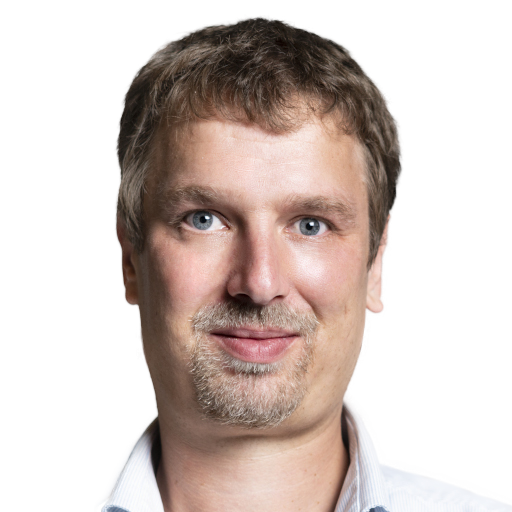
Florian Herzberg

Florian

Florian Herzberg started as a software developer in the mobile gaming industry in 2002. He quickly became a team leader and program manager, including for a NASDAQ-listed IT company. In 2003, he received the German Developer Award. In 2006, he founded Phi Mobile Media Services, providing IT consulting services to advertising agencies and implementing mobile apps for various DAX-listed companies. Another social media startup he founded served clients such as Vodafone, Wacken Festival and New Yorker. Starting in 2016, he was instrumental in building an online marketplace for trade receivables as the responsible product manager and u n 2019 and 2020, he supported the Stern-Wywiol Gruppe in the realignment of its IT operations.

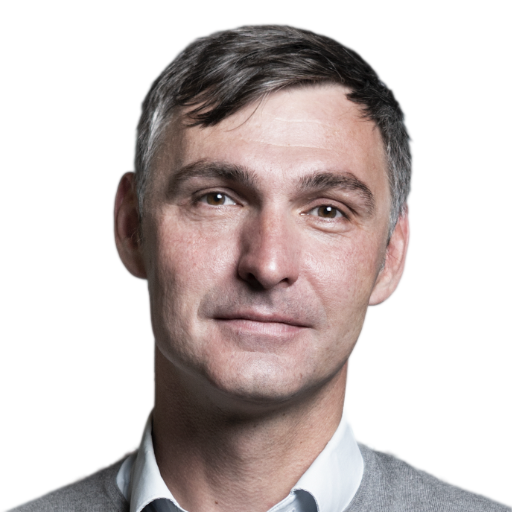
Michael Wilke

Michael

Michael Wilke worked already during his computer science studies as a tutor, as well as a system and network administrator at FH Wedel. After a few years as a senior network administrator in Hamburg, he took over the management of the IT department in a research center and hospital for tuberculosis and HIV in Mbeya, Tanzania in 2011. In the project funded by LMU Munich, the U.S. Military HIV Research Program (MHRP) and the National Institute for Medical Research in Tanzania (NIMR Tanzania), he and his team were responsible for all technical and technological issues in addition to IT. In 2016, as CTO, he led various teams in a Hamburg-based startup and took the lead in the technical design and implementation of an auction platform for trade receivables.

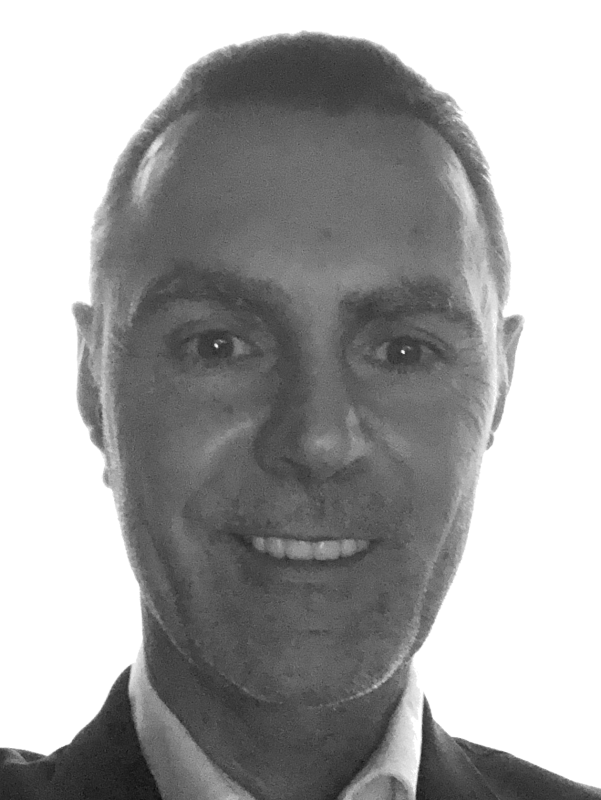
Bernhard Stephan

Bernhard

Bernhard Stephan ist Dipl. Kommunikationswirt, strategischer Unternehmensberater und bereits seit mehr als 25 Jahren erfolgreich in der Konzeption und im Vertrieb innovativer Finanzierungslösungen und digitaler Produkte tätig. Als CEO und/oder Geschäftsführer verantwortete er diverse Firmen in den Geschäftsfeldern FMCG, Venture Capital und Private Equity, der Immobilien- und Versicherungswirtschaft, der Werbewirtschaft sowie im Bereich IT-Enterprise-Softwareentwicklung. Ebenso beriet er Verbände wie den bfm - Bundesverband Factoring für den Mittelstand und Organisationen wie den Lohnsteuerhilfeverein Vereinigte Lohnsteuerhilfe e.V in Angelegenheiten der Marketing- Kommunikations- und Strategieentwicklung. Als Mitgesellschafter in der Kogge.io GmbH kümmerst sich Bernhard, in enger Zusammenarbeit mit der Geschäftsführung, um die Entwicklung und Umsetzung der Sales-Strategie, die Beratung bei Aufgabenstellungen im Bereich Prozessexzellenz, sowie die Entwicklung und Umsetzung von Corporate Identity-, Marketing- und Kommunikationskonzepten für das Unternehmen.

Petra Sütter

gained experience after her banking apprenticeship and business studies in St. Gallen during decades as a relationship manager for international corporate clients in Germany, Austria and Switzerland at Deutsche Bank and the Royal Bank of Scotland, and others. During this time, she obtained a detailed understanding of corporate needs and established a large network of relationships across all levels. Most recently, she supported an online marketplace for trade receivables in its roll out and customer acquisition.

Prof. Dr. Christoph Paulus

is an expert in international insolvency law and restructuring. He has acted as an advisor to the International Monetary Fund and the World Bank on several occasions. Until 2011, Prof. Paulus advised the German delegation during the meetings of the United Nations Commission on International Trade Law in New York and Vienna.

Prof. Dr. Hans-Peter Schwintowski

is Professor of Civil Law, Commercial, Economic and European Law at the Humboldt University in Berlin. His main areas of practice include public and private energy and network law, including regulatory and antitrust law.

Prof. Dr. Jörg-Rafael Heim

is an expert in the field of tax law with a special focus on accounting issues. He received his doctorate in 2015 on the energy industry, antitrust, municipal economic and price law barriers to the award of concessions in the award procedures in the context of the so-called remunicipalization.

Dr. David Saive

is an expert in the field of digitization of trade and transport documents. With his expertise in the technical implementation of legal requirements, he supports all companies involved in transport, trade and trade finance.

Get Started

Mail